Plenary Speaker — Agnes Kukulska-Hulme

  • Invited Speakers
  • Plenary Speaker — Agnes Kukulska-Hulme

Agnes Kukulska-Hulme 


Agnes Kukulska-Hulme is Professor Emerita of Learning Technology and Communication at The Open University, UK. Her expertise encompasses online education, mobile learning, migrant learning, and self-directed language learning. She is on the Editorial and Advisory Boards of several journals and is Past-President of the International Association for Mobile Learning. In addition to over 300 academic publications and papers, she has co-edited several books and authored policy and practice reports for UNESCO, British Council, Commonwealth of Learning, International Research Foundation for English Language Education and Cambridge University Press. Professor Kukulska-Hulme has served as an external evaluator in reviews of research and teaching in several institutions, and as an external examiner of over 40 doctoral theses. She has led and contributed to numerous research projects focusing on migrants’ language learning, future roles of digital/AI-enabled mobile learning and the English language in Higher Education, language-mediated access to essential online services, and teachers’ professional development.


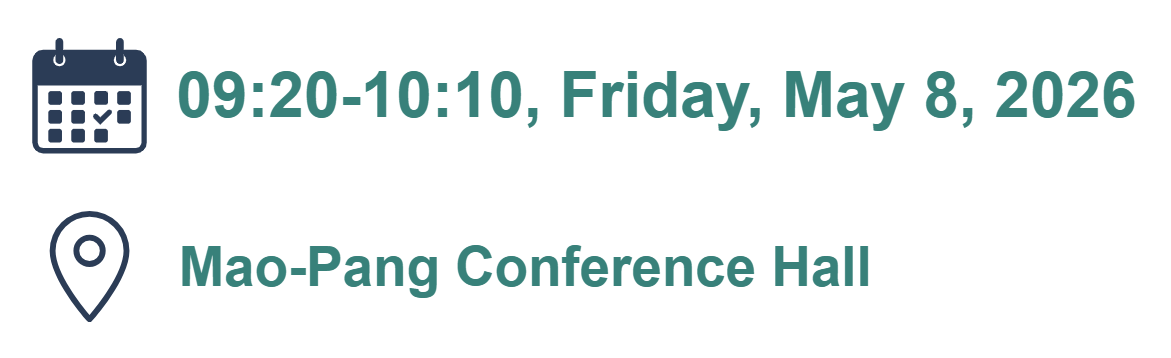
Plenary Presentation Title: Cultivating a Conversational Vision for Mobile Language Learning with GenAI


Abstract: 


Over the past two decades, the spread of mobile technologies has reshaped the landscape of language education. While many institutions continue to cultivate carefully structured approaches to mobile learning, informal out-of-class language learning has grown more freely, like wildflowers taking root beyond the borders of formal gardens. These self-seeding practices have diversified the ecology of language learning, revealing new forms of participation, creativity and autonomy. Into this already varied landscape, generative AI (GenAI) introduces another kind of seed: one that grows unpredictably through conversation. GenAI as a conversational medium extends the dialogic and interactionist foundations of language learning and invites reflection on what constitutes dialogue, understanding and learning. It also raises the question of what kinds of conversations people have throughout their increasingly mobile, extended and complex lives in changing societies. GenAI seems uniquely poised to respond to their personal, continuously evolving needs. 


This presentation proposes a conversational vision of mobile language learning that connects several levels of dialogue: with AI systems, with objects and people in physical spaces, among learners within digital environments, and across the broader educational and societal conversations that shape language use. Drawing on traditions of dialogic learning and critical applied linguistics, we ask what kinds of conversations language educators, learners and technologies should be cultivating and whose voices are heard in these evolving ecologies. Finally, as with any ecosystem, growth is uneven. Research shows that while mobile learning has extended opportunities for many, disparities in access, representation and digital literacy risk creating new forms of exclusion. The challenge for language educators and researchers is to nurture a more inclusive and dialogically grounded future for GenAI-enabled mobile language learning. 


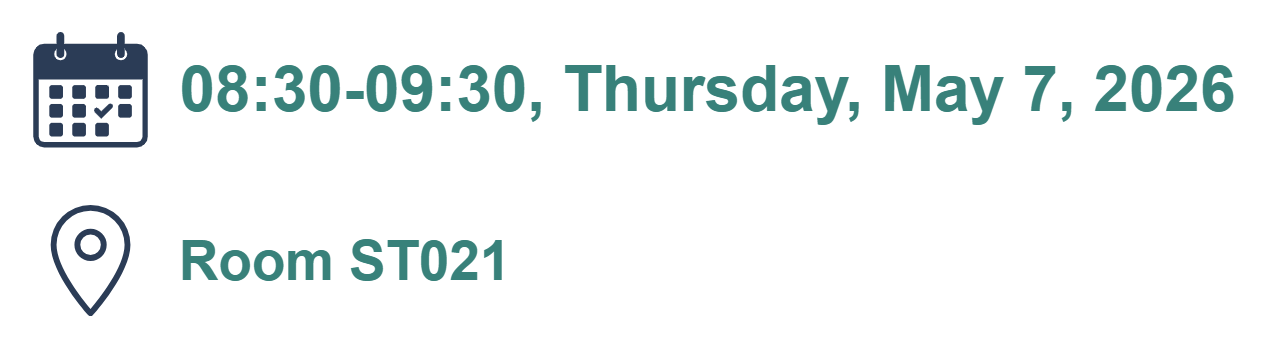
Workshop Title: Who am I as a language teacher in the age of AI?


Abstract: 


This workshop is for language teachers and support staff who may work in a variety of settings. The integration of Artificial Intelligence into educational environments marks a significant moment of transition, compelling teachers to move away from established practices and critically reassess their professional identities, roles and responsibilities. A common question currently posed by teachers is: Will AI replace us and make us redundant? This suggests the need to strengthen teachers’ capacity to show that they are not replaceable, and to bolster their ability to explain their expertise to people who are outside their professional circles. Some commonly held ideas around a language teacher’s unique contributions include their capacity to draw on real-world experience, to motivate students, to show empathy and to adapt their teaching in a dynamic way to specific circumstances and students. However, such generic claims may come across as rather vague, while they are also incomplete and lack contextual and cultural nuance. 


The aims of the workshop are: (a) to discuss how the advent of AI is affecting language teachers, and (b) to help teachers articulate their expertise and value, especially when compared with the capabilities of AI. The session is inspired by Käck’s (2024) work with migrant teachers in Sweden—teachers from other countries undergoing a process of transformation as they learn new methods and reshape their teacher identities in Sweden. The session also draws upon the research of Anderson (2023 & 2024) which examines the construct of teacher expertise and illuminates the professional practices of expert teachers working in the Global South, as well as the expertise of language teachers. Participants will leave the workshop equipped with a practical framework for defining language teacher expertise and the ability to confidently communicate their irreplaceable value to learners, administrators and the wider community.