Panelists

  • Invited Speakers
  • Panelists

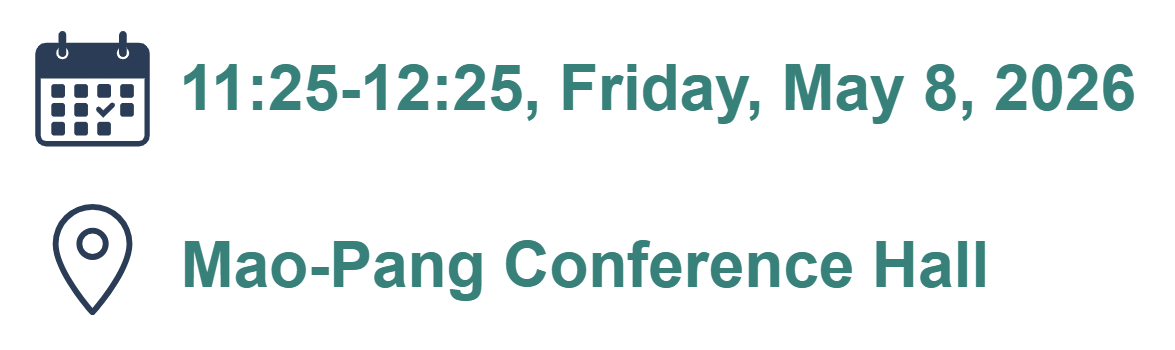
Featured Panel 1: Rethinking Applied Linguistics in the Age of AI: Pedagogy, Agency, and Transformation


Abstract: 

This featured panel examines how artificial intelligence is reshaping applied linguistics through evolving pedagogies, research practices, and reconfigured notions of agency. Bringing together perspectives from TESOL, computer-assisted language learning, language assessment, and corpus linguistics, the panel explores how generative and multimodal AI technologies are transforming language teaching, learning, and analysis. The first presentation demonstrates how AI-assisted error annotation enables large-scale learner corpus development, expanding possibilities for applied linguistic research. The second examines how pre-service language teachers from diverse cultural backgrounds engage with AI during academic tasks, revealing emerging patterns of interaction and shifting forms of learner agency. The third investigates AI-supported L2 test development, highlighting both its efficiency and the need for human oversight to ensure validity and rigor. Together, these contributions highlight both opportunities for innovation and critical challenges, offering pedagogically grounded insights into responsible and meaningful transformation in an increasingly AI-mediated applied linguistics landscape.


Panelist 1

Hao-Jan Howard Chen

National Taiwan Normal University

Howard Hao-Jan Chen is Distinguished Professor in the  Department of English at National Taiwan Normal University,  Taiwan. His research focuses on computer-assisted language  learning, technology-enhanced language learning, corpus  linguistics, and second language acquisition. He has served as  an associate editor of *Computer Assisted Language Learning*  and leads the NTNU team commissioned by Taiwan’s Ministry  of Education to develop the Cool English platform. His work  centers on AI, learner corpora, and innovative technology supported language education. ([National Taiwan Normal  University])


Panelist 2

Hsin-I Chen

National Taipei University of Technology

Hsin-I Chen is Associate Professor in the Department of English at National Taipei University of Technology, Taiwan. Her research focuses on technology-enhanced language learning and teaching, VR-mediated learning, teacher education, and multimodal learning. Her work has been published in leading international journals, including Language Learning & Technology and Educational Technology & Society. She currently serves as President of the Taiwan Computer-Assisted Language Learning Association (TaiwanCALL) Association.  Her recent research centers on human-centered approaches to artificial intelligence in language education, with particular attention to agency, interaction, and creative learning in AI mediated environments.


Panelist 3

Ray J. T. Liao

National Taiwan Ocean University

Ray Jui-Teng Liao is Assistant Professor in the Institute of  Applied English at National Taiwan Ocean University. His  research focuses on language assessment, including L2  integrated writing and reading, test development and validation,  and score generalizability, using quantitative, qualitative, and  mixed-methods approaches. His work has appeared in top-tier  international journals, including Language Testing, Language  Assessment Quarterly, Journal of English for Academic  Purposes, and Assessing Writing. He has also conducted  interdisciplinary research published in the International Journal  of Science Education. His recent work explores the application  of generative artificial intelligence in language assessment.


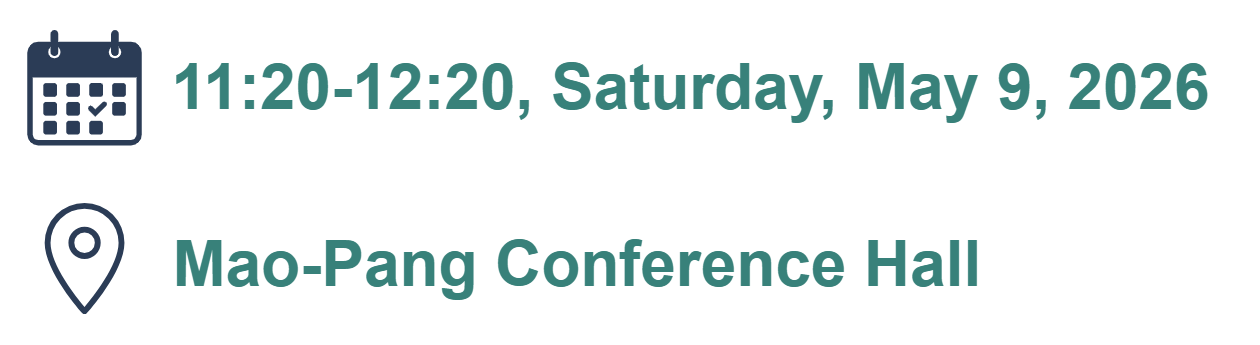
Featured Panel 2: Beyond Language Learning: Multiple Pathways in the Bilingual Digital Study Companion Program
 

Abstract:

This panel brings together principal investigators from four universities implementing innovative digital companion programs that pair university tutors with elementary and middle school learners to develop English language proficiency alongside meaningful content learning through technology-enhanced pedagogies. While sharing common commitments to accessibility, equity, and engagement, each institution has adapted the model to address distinct educational priorities and linguistic contexts.


Presentations showcase diverse approaches: SDG-focused scaffolding supporting sustainability literacy and English reception skills (Tunghai University); CLIL-based integration of bilingual education with Education for Sustainable Development examining lesson design quality and university-school partnerships (National Taipei University of Education); inquiry-oriented and game-based review designs exploring AI-assisted scaffolding for communication (National Chung Hsing University); and scalable multilingual digital ecosystems extending beyond bilingual frameworks to include indigenous and heritage languages (National Pingtung University).


From Kahoot and Jamboard to AI-assisted prompting, panelists will address how interactive digital platforms democratize language learning access for underserved populations. Discussions will explore tutor training models, technological integration strategies, assessment approaches, and implementation challenges—including scalability, resource management, and sustaining university-community partnerships. The panel offers insights into designing equitable, technology-enhanced language programs that foster both linguistic development and broader educational goals aligned with Taiwan's evolving multilingual education landscape.


Panelist 1

Min-Hsun Liao

Tunghai University

Min-Hsun Liao is an Associate Professor in the Department of Foreign Languages and Literature at Tunghai University, Taiwan. She is serving as the Chief International Officer overseeing the university's internationalization and being involved in several language-related projects. She has been a local advisor to Fulbright English Teaching Assistants since 2013. Her research interest includes technology-enhanced language learning, telecollaboration, language teacher education, and bilingual education in Taiwan. She has published articles in Teaching and Teacher Education, the Journal of Research in Reading, Curriculum & Instruction Quarterly, the Journal of Taiwanese Language and Literature, and so on.


Panelist 2

Ya-Chen Chien

National Taipei University of Education

Dr. Jane Chien is an Associate Professor at National Taipei University of Education, specializing in digital learning, teacher education, and bilingual education. Her work focuses on designing engaging and equitable EFL environments through technology-enhanced pedagogy. As Principal Investigator of several Ministry of Education–funded projects, she led the Bilingual Digital Learning Companion Program and currently directs the AI D+ program, preparing pre-service teachers for remote bilingual instruction. She also supports national initiatives such as Cool English and TestMyEnglish, expanding access to CEFR-aligned digital assessment. She serves as TESOL International Association’s Digital Learning and Technologies Strand Coordinator and an Electronic Village Online (EVO) Coordinator.


Panelist 3

Cheng-Chi Lai 

National Chung Hsing University

Cheng-Ji (Paul) Lai is an Associate Professor at the Language Center of National Chung Hsing University, Taiwan. His recent research spans two interrelated domains. The first examines technology-enhanced language learning (TELL) in elementary CLIL classrooms, investigating how immersive virtual reality, generative AI (including IVR + GAI designs), adaptive learning platforms, board games, and hands-on activities support students’ acquisition of target vocabulary, content knowledge, multimodal literacy, and written and oral scientific performance. The second focuses on CLIL teacher education, exploring how pedagogically grounded professional development in science and music enhances pre-service and in-service teachers’ pedagogical content knowledge, bilingual instructional competence, and classroom practice.


Panelist 4

Ching-Ying Lin

National Pingtung University

Dr. Ching Ying Lin is Deputy CEO of the Digital Transformation Center and a faculty member in the Applied English Department at National Pingtung University. She holds an Ed.D. in Bilingual Education from Texas A&M University and a Certificate in EMI from Teacher College, Columbia University in the USA. Dr. Lin specializes in EMI, multilingual education, digital learning ecosystems, and technology-enhanced language teaching. Her research focuses on curriculum design, tutor scaffolding, and integrating digital tools to enhance accessibility, learner engagement, and cross-cultural competence. She has led large-scale initiatives engaging over 600 students, developing structured tutor training, digital scaffolding, and cloud-based collaborative platforms to support effective multilingual education.


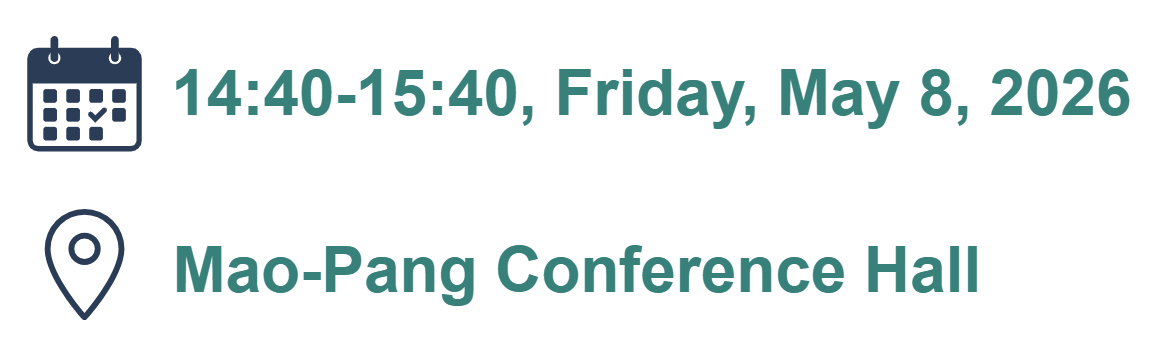
Featured Panel 3:  AI and Language Education


Abstract:

The rapid integration of Artificial Intelligence (AI) and computational thinking (CT) is reshaping language education, calling for innovative pedagogical designs that support both teacher development and learner engagement. This panel brings together three complementary perspectives on AI-enhanced language learning, focusing on pedagogical AI agent design, interdisciplinary instructional innovation, and  teacher learning processes.

Across the presentations, GenAI is explored as a  medium for designing pedagogical AI agents that support differentiated instruction and writing development, as well as a tool for fostering self-directed learning (SDL) among preservice teachers in developing digital teaching materials. In addition, CT-based learning environments and AI-powered applications are introduced to promote authentic language use, personalization, and engagement through interdisciplinary approaches.

Collectively, these perspectives highlight the critical role of teacher agency, AI literacy, and instructional design in effectively integrating AI into language education. The panel further invites discussion on how AI-mediated learning environments can be designed to support diverse learners, enhance SDL competencies, and bridge the gap between technological innovation and pedagogical practice.


Panelist 1

Yu-Ju Lan

National Taiwan Normal University

Yu-Ju Lan is a Distinguished Professor in the Department of Chinese as a Second Language at National Taiwan Normal University in Taiwan. Her research focuses on integrating AI, the metaverse, and emerging technologies into language learning and teacher education, with a particular emphasis on learner engagement, instructional design, and learning effectiveness. Prof Lan has been listed in the Stanford/Elsevier Top 2% Scientists worldwide annual ranking for six consecutive years, as well as in the career ranking for three consecutive years, reflecting her sustained scholarly impact. Her research has been supported by multiple externally funded projects and recognized with the 2022 Outstanding Research Award from Taiwan’s National Science and Technology Council. Prof Lan currently serves as Editor-in-Chief of Educational Technology & Society and as Research Syntheses Editor of Language Learning & Technology, actively contributing to international research collaboration and providing academic leadership in the fields of educational technology and language education.


Panelist 2

Ting-Chia Hsu

National Taiwan Normal University

Ting-Chia Hsu is a Distinguished Professor at National Taiwan Normal University, specializing in computational thinking and AI literacy. She has received major awards, including the APSCE Early Career (2018) and Distinguished Researcher (2025) Awards, the MOST Wu-Da-Yu Memorial Award (2018), and the Future-Tech Award (2020). With 50+ SSCI publications, she has strong international impact and has held visiting positions at NIE (2011), MIT (2019), and Vilnius University (2024). She is a textbook editor, conference leader, PI of the MOE Big Data Microprogram (2023–2025), and Editor-in-Chief of the Taipei AI Education White Paper (2026).


Panelist 3

Wen-Chi Wu

National Chung Hsing University

Wen-Chi Vivian Wu is a professor of the Institute of Professional Development for Educators/Center for Teacher Education. She has published extensively on CALL and educational technology related SSCI journals, with research interests focusing on AI, Robotics learning, VR/AR, flipped classrooms, MALL, and cross-cultural communication. She has highly cited SSCI articles on topics including flipped instruction and learner motivation. Additionally, her publications and training on conducting research in the field of educational technologies, editorial experiences for several international high-quality language and education related journals, and dedication to numerous international associations and organizations, such as serving as guest editor, executive director, and conference chair, etc. all have made her well recognized